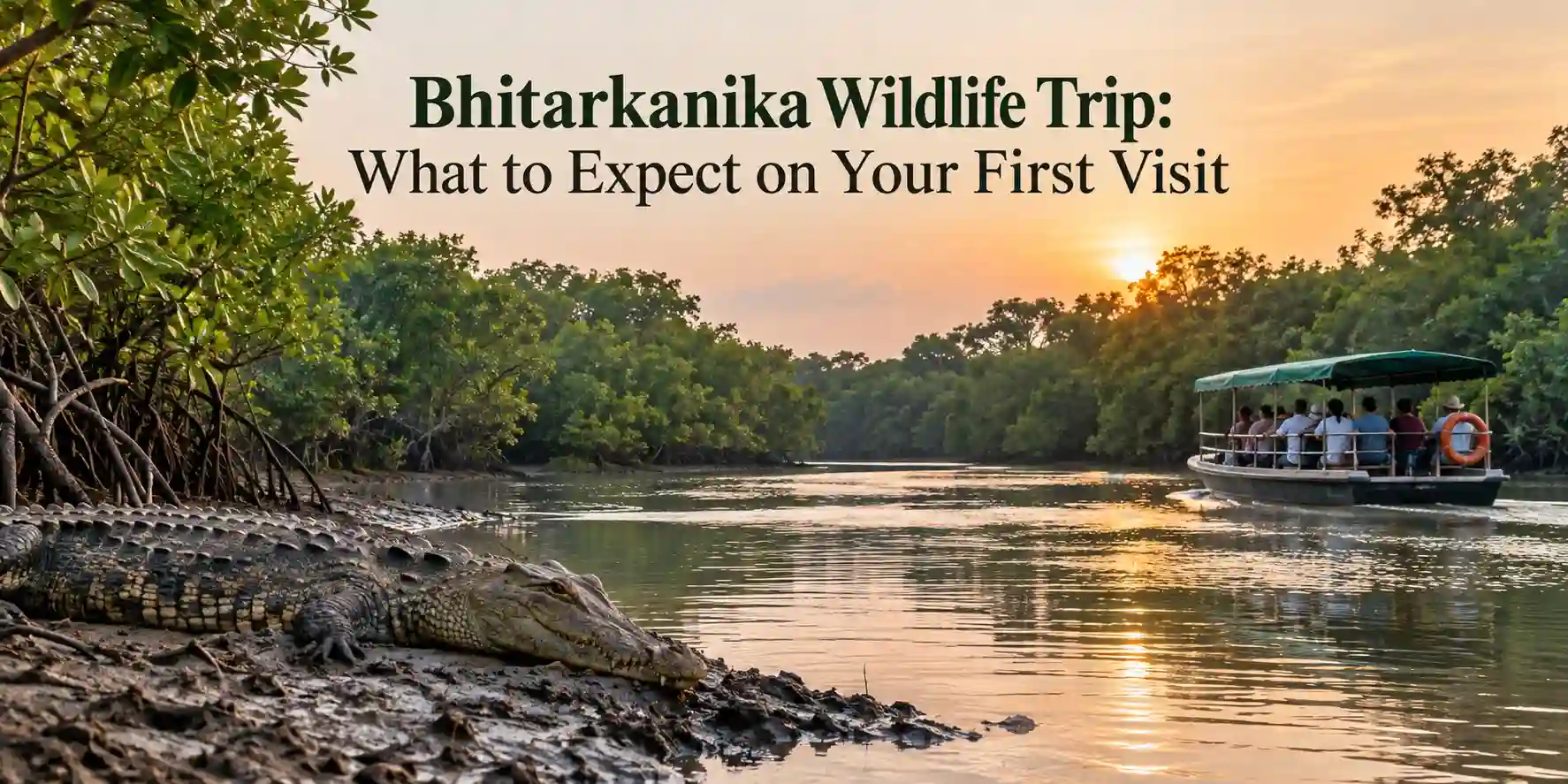
What should you expect on a Bhitarkanika wildlife trip?
You should expect a wildlife experience built around mangrove waterways, boat journeys, wildlife spotting, birdwatching and short nature walks rather than a conventional road safari. Bhitarkanika’s landscape is made up of tidal creeks, mangroves, wetlands and forest, so the way you explore it is as important as the places you visit.
For a first-time traveller, the biggest mistake is trying to treat Bhitarkanika like a one-stop sightseeing destination. Give yourself enough time to get on the water, explore the wildlife habitat, visit a few key locations and return to a comfortable base without rushing from one activity to another.
Here is what a practical first trip looks like.
What Makes a Bhitarkanika Wildlife Trip Different?
Bhitarkanika National Park is in Kendrapara district of Odisha and is known for its mangrove ecosystem, waterways, saltwater crocodiles, birds and other wildlife. The park’s geography shapes the entire visitor experience. Many of the most interesting areas are accessed through waterways rather than a simple road loop.
That means a Bhitarkanika wildlife journey feels more exploratory.
You may start the morning on a boat, move through narrow creek sections, watch the banks for crocodiles, stop to look at birds and then continue to another part of the park. Later, you can combine the water experience with a forest trail or nearby attraction.
It is this combination of water + mangrove + wildlife + walking that makes the trip different from a standard safari.
For a broader introduction to the destination, see Bhitarkanika National Park.
What Wildlife Can You See in Bhitarkanika?
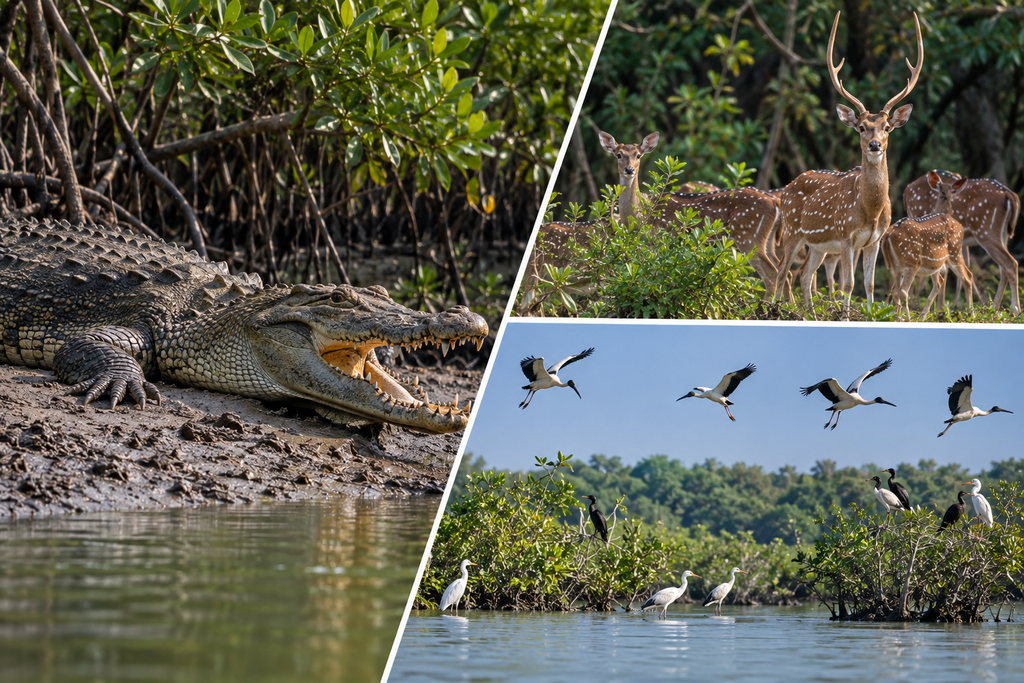
A wildlife trip here is not only about one species.
Saltwater Crocodiles
Saltwater crocodiles are one of the defining wildlife attractions of Bhitarkanika. The mangrove creeks and tidal habitat provide the setting for many of the sightings visitors hope to get during a boat journey.
The important thing for first-time visitors is to understand that sightings are wildlife sightings. There is no guarantee that an animal will appear exactly where you expect it to.
That unpredictability is why a quiet boat ride, a patient guide and enough time matter.
For a dedicated look at this experience, explore the Bhitarkanika Crocodile Safari page.
Spotted Deer and Other Animals
The park’s wider habitat supports spotted deer, wild boar, sambar, monitor lizards and other reptiles and animals. The exact species you see can vary depending on the route, season, weather and time spent in the area.
Rather than planning your day around checking off a fixed list of animals, plan around spending enough time in the habitat.
Birds Are a Major Part of the Experience
Bhitarkanika is equally interesting for birdwatchers. The region supports resident birds as well as migratory species, and the waterways, wetlands and forest edges create different viewing opportunities.
You may come across kingfishers, herons, egrets, darters, cormorants and other wetland birds.
For serious birding, patience is often more valuable than trying to cover too many places in one day.
See the full Bird Watching in Bhitarkanika guide before planning your route.
How Do You Actually Explore Bhitarkanika?
There are two experiences that should shape your plan: boating and walking.
1. Start With the Water
Boating is one of the most important ways to experience Bhitarkanika because the park’s waterways open access to mangrove areas that are difficult to understand from the road alone. The resort’s boating guide also focuses on creek and river-based exploration, wildlife viewing and route planning.
A boat journey gives you a moving view of the ecosystem.
The mangroves close in around narrow stretches of water. Open sections give you wider views of the banks. A crocodile may be resting near the edge. Birds may be perched above the creek. Sometimes you may spend several minutes seeing nothing obvious and then suddenly notice wildlife directly beside the boat.
That is why the boat ride should be treated as part of the wildlife experience rather than simply transportation.
Read more about Boating in Bhitarkanika.
2. Add a Nature Walk
Walking gives you a completely different perspective.
From a trail, you notice the forest floor, plants, tracks, smaller wildlife and details that can disappear when you are moving across the water. The site’s current Bhitarkanika structure also positions nature walks as a separate experience from boating and wildlife viewing.
A good first-time itinerary should ideally include both.
Which Places Are Worth Adding to a First Wildlife Trip?
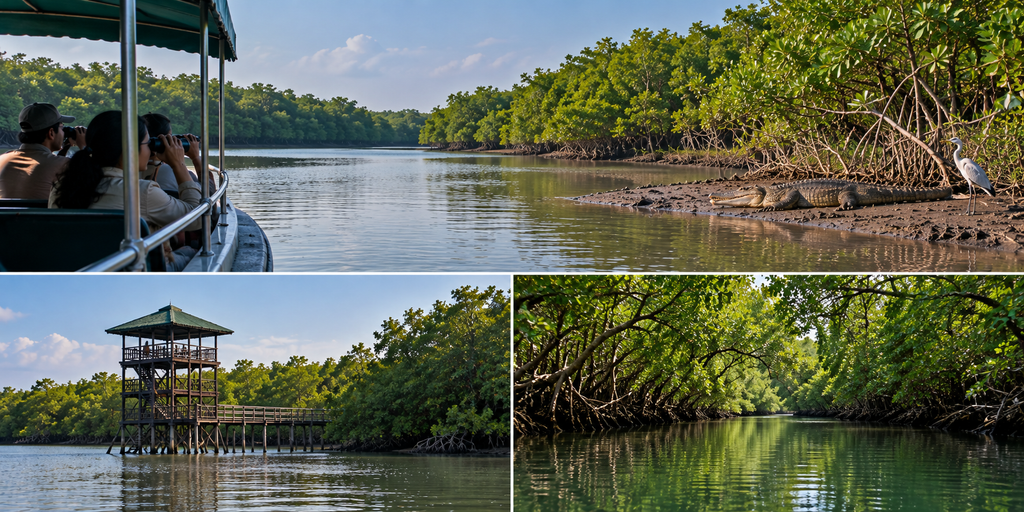
You do not need to visit every location around Bhitarkanika. A few key stops are enough to build a strong first trip.
Dangamal
Dangamal is strongly associated with Bhitarkanika’s crocodile experience and is worth including for travellers particularly interested in crocodiles and wildlife.
Bagagahana
Bagagahana is especially relevant for birdwatchers. The area is associated with nesting and bird activity, making it a useful addition when birding is one of your priorities.
Habalikhati
Habalikhati can work as part of a broader nature and coastal itinerary, especially when you have more time than a quick overnight visit.
For the broader attraction list, visit Places to Visit in Bhitarkanika.
How Many Days Should You Spend on a Bhitarkanika Wildlife Trip?
This depends on what you want from the journey.
1 Night 2 Days
A 1 Night 2 Days Bhitarkanika wildlife trip works when you want the essentials:
Arrival
Stay
Boat-based wildlife experience
A few key attractions
Departure
It is suitable when time is limited, but the schedule needs to stay realistic.
See the 1 Night 2 Days Bhitarkanika Tour Package.
2 Nights 3 Days
A 2 Nights 3 Days trip gives you much more breathing room.
You can include boating, wildlife, birdwatching and additional sightseeing without making every hour part of a fixed schedule.
For a first-time visitor who does not want to rush, this is often the better format.
See the 2 Nights 3 Days Bhitarkanika Tour Package.
3 Nights 4 Days
A 3 Nights 4 Days wildlife holiday gives you enough time to combine the main Bhitarkanika experience with wider nature and coastal stops.
The current resort package structure includes longer stays with boating, wildlife, trekking, birdwatching and coastal sightseeing.
See the 3 Nights 4 Days Bhitarkanika Tour Package.
What Does a Typical Bhitarkanika Wildlife Day Look Like?
A useful first-time schedule should leave some room between activities.
Early Morning
Start early, have breakfast and head out for your main wildlife activity.
Morning is a good time to focus on observation before the day becomes hotter and busier.
Morning to Midday
Spend the main part of your outing on the water or around your planned wildlife route.
This is where you may see crocodiles, birds, deer or other wildlife depending on natural conditions.
Midday
Return for lunch and take a break.
This matters more than it sounds. A wildlife trip becomes tiring when travellers try to fill every hour with sightseeing.
Afternoon
Use the later part of the day for a nature walk, nearby attraction or quieter local experience.
Evening
Return to your accommodation, have dinner and use the evening to plan the next day rather than immediately adding another long activity.
What Should You Carry?
A Bhitarkanika wildlife trip does not require specialised expedition equipment, but a few things make a real difference.
Binoculars are especially useful for birdwatching.
Comfortable footwear is important if you are combining boating with nature trails.
Sun protection helps during exposed parts of the day.
Light, comfortable clothing works better than heavy travel clothes.
Drinking water is worth carrying during longer outdoor periods.
A camera is useful, but wildlife should come first rather than spending the entire experience looking through a screen.
Where Should You Stay During a Wildlife Trip?
Your accommodation affects the pace of the trip.
A convenient stay gives you a place to return to after several hours outdoors, while facilities such as dining, comfortable rooms and travel assistance can make a multi-day trip easier to manage.
Herit Eco Resort’s current site positions the property as a base for Bhitarkanika exploration, with different room categories, dining, pool and support for boating, sightseeing and wildlife activities.
For room options, see Rooms at Herit Eco Resort.
For larger family groups, the Family Suite with 2 Bedrooms offers a separate accommodation option.
Who Is a Bhitarkanika Wildlife Trip Best For?
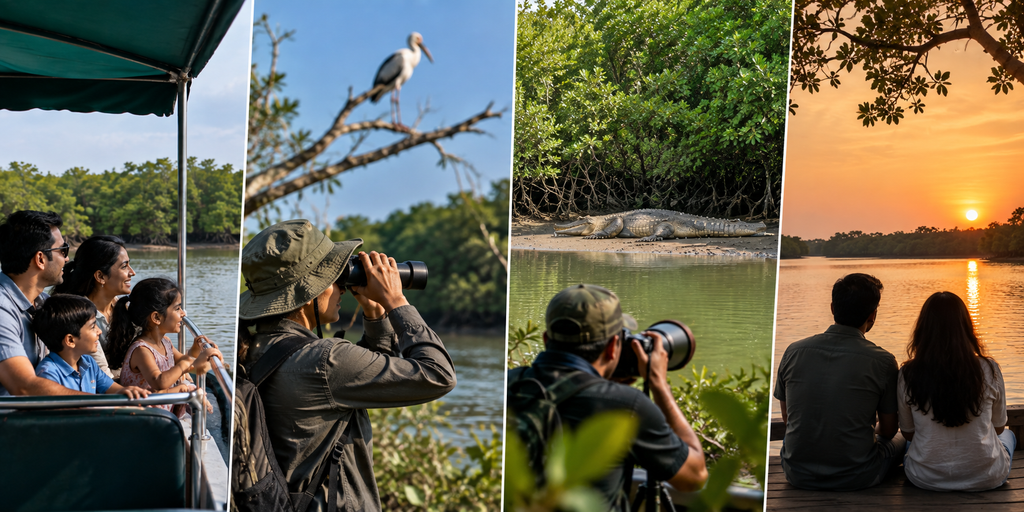
Families
Families can enjoy Bhitarkanika when the itinerary is paced sensibly. Boat rides, wildlife viewing and birdwatching can be combined without making the trip unnecessarily demanding.
Birdwatchers
Birdwatchers should allow enough time for observation rather than treating birding as a quick stop between attractions.
The park’s birdlife is one of the reasons it deserves more than a rushed visit.
Wildlife Photographers
Photographers should expect waiting.
The best moments are often the ones you cannot schedule in advance: a crocodile surfacing near the bank, a bird holding its position long enough for a clear shot, or an unexpected wildlife sighting during a quiet section of the route.
Couples and Nature Travellers
For couples and travellers who prefer slower, nature-focused trips, Bhitarkanika works well because the experience is built around waterways, forest, wildlife and time outdoors rather than packed urban sightseeing.
A Simple First-Time Bhitarkanika Wildlife Trip Plan
Here is a practical way to structure your first visit.
Day 1 — Arrival
Arrive and check in
Have lunch
Settle into your room
Take a short walk or explore nearby surroundings
Have an early dinner
Prepare for the next morning
Day 2 — Wildlife Day
Start early
Take the main boating/wildlife experience
Spend time observing birds and wildlife
Return for lunch and rest
Visit a nearby attraction or walking trail
Return to the resort in the evening
Day 3 — Additional Exploration
Add a second wildlife or birdwatching experience if needed
Explore another planned destination
Begin your onward journey
For a short trip, reduce the number of stops rather than cutting the wildlife experience itself.
What First-Time Visitors Often Get Wrong
The biggest planning mistakes are surprisingly simple.
Trying to See Everything
Bhitarkanika is better experienced with fewer stops and more time at each one.
Treating the Boat as Just Transport
The waterways are part of the attraction. Do not rush through them simply to reach the next stop.
Booking Without Checking the Route
Know which boating and sightseeing activities you actually want before finalising the schedule.
Ignoring the Accommodation Location
A stay that works well for your planned route can save unnecessary travel time.
Building an Itinerary Without Buffer Time
Wildlife does not follow a timetable. Give yourself some room for delays, waiting and unexpected sightings.
Why a Wildlife Trip Works Better as an Overnight Stay
A day trip can introduce you to Bhitarkanika, but an overnight stay changes the pace.
You arrive without having to immediately turn around.
You can start the next day fresh instead of beginning a wildlife outing after a long journey.
You have time for more than one type of experience.
And after spending several hours around mangroves and waterways, you can return to a proper room rather than beginning another long road journey.
That is where the accommodation part becomes connected to the wildlife experience rather than being a separate decision.
For travellers planning an overnight visit, explore Bhitarkanika Tour Packages.
Final Takeaway
A Bhitarkanika wildlife trip is best planned around the way the destination actually works.
Start with the waterways. Allow time for wildlife observation. Add birdwatching or a nature trail. Choose a few worthwhile places instead of trying to cover everything. Then stay somewhere that makes the trip practical rather than adding more travel between activities.
For a first visit, a simple combination of boat-based wildlife exploration + birdwatching + selected sightseeing + an overnight stay is enough to understand why Bhitarkanika is different from a conventional safari destination.
Herit Eco Resort provides a base for travellers who want to combine comfortable accommodation with access to the Bhitarkanika experience, including rooms, dining and assistance with local activities.
Frequently Asked Questions
1. Is Bhitarkanika good for a wildlife trip?
Yes. Bhitarkanika combines mangrove forests, tidal waterways, saltwater crocodiles, birdlife and other wildlife, making it well suited to nature and wildlife-focused travel.
2. What wildlife can you see on a Bhitarkanika wildlife trip?
Depending on the route and natural conditions, visitors may see saltwater crocodiles, spotted deer, monitor lizards and a range of resident and migratory birds.
3. Is boating important for a Bhitarkanika wildlife trip?
Yes. Boating is a major way to explore the mangrove waterways and observe wildlife from the water.
4. How many days are enough for Bhitarkanika?
One night and two days can cover the core experience, while two or three nights give you more time for wildlife, birdwatching and additional sightseeing.
5. Is Bhitarkanika suitable for families?
Yes. Families can enjoy boating, birdwatching and wildlife activities when the itinerary is planned around reasonable travel time and age-appropriate activities.
6. What should I carry for a Bhitarkanika wildlife trip?
Binoculars, comfortable footwear, light clothing, sun protection, drinking water and a camera are useful for most visitors.
7. Is an overnight stay worth it?
Yes. An overnight stay allows you to experience Bhitarkanika at a slower pace and gives you more flexibility to combine boating, wildlife, birdwatching and sightseeing.
8. What is the best way to plan a first Bhitarkanika trip?
Start with the core wildlife experience, add one or two complementary activities, and choose an itinerary that matches the time you actually have rather than trying to cover every attraction in one visit.
Read more about: where-to-stay-in-bhitarkanika