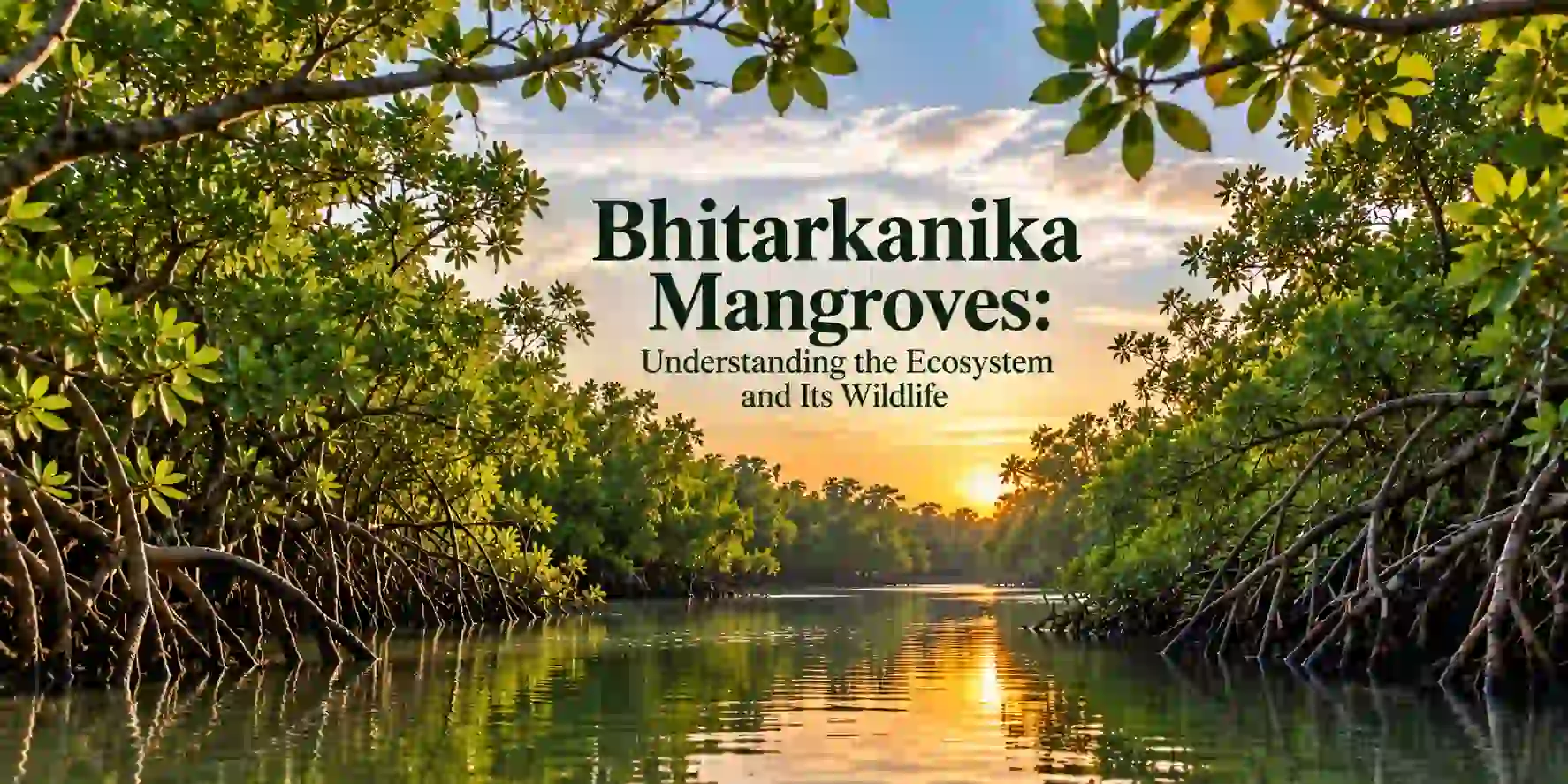
Bhitarkanika is best known for its saltwater crocodiles, mangrove waterways and birdlife, but the real story begins with the ecosystem itself. The Bhitarkanika mangrove ecosystem is a tidal wetland system made up of mangrove forests, creeks, rivers, wetlands and intertidal areas that support a wide range of wildlife. The national park is connected by a network of waterways influenced by the Brahmani, Baitarani, Dhamra and Patasala river systems.
That matters when planning a visit. Much of Bhitarkanika is experienced from the water, so the creeks and changing tidal landscape are not simply part of the scenery—they are part of how the ecosystem functions and how visitors move through it.
What Is the Bhitarkanika Mangrove Ecosystem?
The Bhitarkanika mangrove ecosystem is a coastal, tidal environment where mangrove forests, waterways, wetlands, riverine islands and intertidal zones work together as one habitat. Low-lying parts of the mangrove area are regularly affected by tidal inundation, while the connected creeks and wetlands provide different conditions for plants, birds, reptiles and other wildlife.
This is what makes Bhitarkanika different from a conventional inland forest.
The ground is influenced by water movement. Some areas remain wet, some become exposed as water levels change, and different sections of the ecosystem have different combinations of vegetation, mud, shallow water and open channels.
The result is a landscape where the forest and waterways are closely connected.
For a broader understanding of the protected landscape, see our Bhitarkanika National Park guide.
Why Are Mangroves Important in Bhitarkanika?
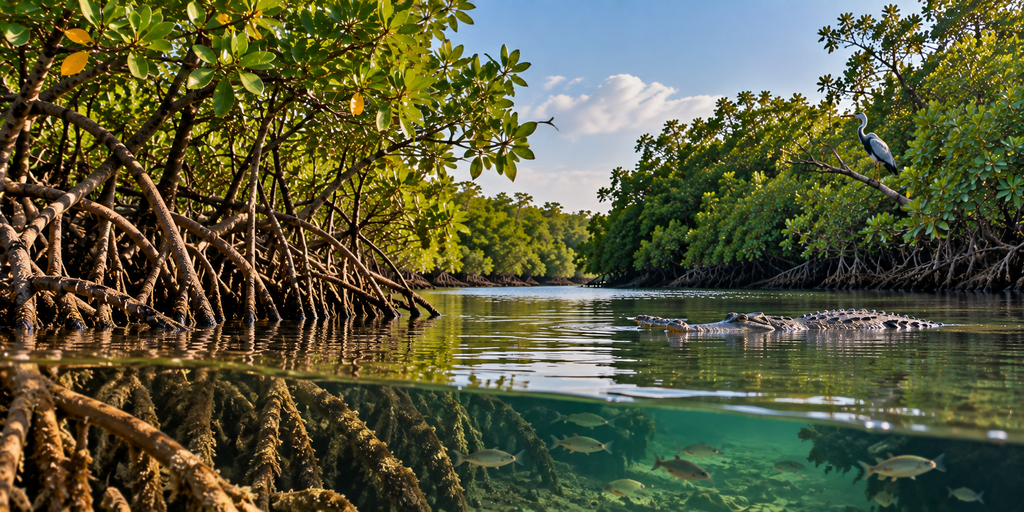
Mangroves are important in Bhitarkanika because they provide habitat for wildlife, help stabilize coastal sediments and reduce the force of tidal water movement. Their root systems also help hold mud and sediment along tidal riverbanks and support the structure of this coastal environment.
Mangroves create wildlife habitat
Mangrove vegetation provides feeding, shelter and nesting environments across different parts of the ecosystem. The surrounding creeks, wetlands and riverine islands add further habitat for birds and aquatic species.
This is one reason Bhitarkanika cannot be understood by looking only at its famous crocodiles. The crocodiles, deer, birds, reptiles and other species exist within a much larger network of habitats.
Mangroves interact with tidal water
The low-lying mangrove forests are regularly inundated by tides. As water moves through the creeks, conditions change across mudflats, riverbanks and wetlands.
Mangroves help protect the coast
The dense vegetation helps slow tidal surges and stabilise newly deposited mud and silt. Ramsar’s documentation for Bhitarkanika identifies shoreline stabilisation, sediment trapping and protection from tidal surges among the ecosystem’s important functions.
How Do the Tidal Creeks Shape Bhitarkanika?
Bhitarkanika’s tidal creeks connect different parts of the mangrove and wetland landscape, while changing water levels influence the conditions along their banks and surrounding habitats. The park is essentially a network of creeks and canals supplied by surrounding rivers, making the waterways central to both the ecosystem and the visitor experience.
This is why boating is such an important part of exploring Bhitarkanika.
Instead of following a conventional road-based safari route, visitors travel through the waterways and see the forest from the creek itself.
Our detailed guide to Boating in Bhitarkanika explains what the boat experience involves.
The waterways can pass through dense mangrove sections, wider channels and areas where the banks open out. Wildlife may appear along the water’s edge, but sightings naturally vary depending on conditions and location.
What Wildlife Lives in the Bhitarkanika Mangroves?
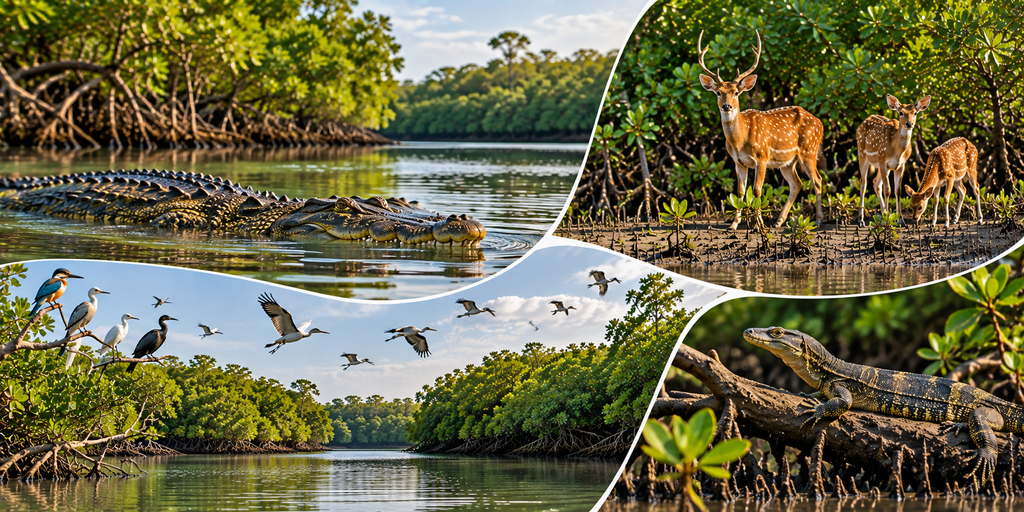
The Bhitarkanika mangrove system supports saltwater crocodiles, spotted deer, wild boar, reptiles and many resident and migratory birds. Odisha Tourism identifies the saltwater crocodile as the apex predator of the region and also lists species such as water monitor lizards and pythons.
Saltwater crocodiles
Saltwater crocodiles are one of the defining wildlife species of Bhitarkanika. The waterways and exposed creek banks provide an environment where visitors may spot crocodiles resting near the water.
Their presence is closely connected to the wider mangrove and estuarine habitat rather than to one isolated viewing location.
This is why a Bhitarkanika wildlife trip is better approached as an ecosystem experience rather than a search for one particular animal.
Deer and other mammals
Spotted deer and wild boar are among the mammals associated with Bhitarkanika.
The likelihood of seeing any particular animal changes with route, weather, time and simple wildlife behaviour. There is no fixed sequence of sightings.
Reptiles
The park also supports reptiles including water monitor lizards and pythons.
For visitors, this adds another layer to the experience: the mangrove habitat supports a much wider range of species than the crocodiles and birds for which Bhitarkanika is most famous.
Why Is Bhitarkanika Important for Birdwatching?
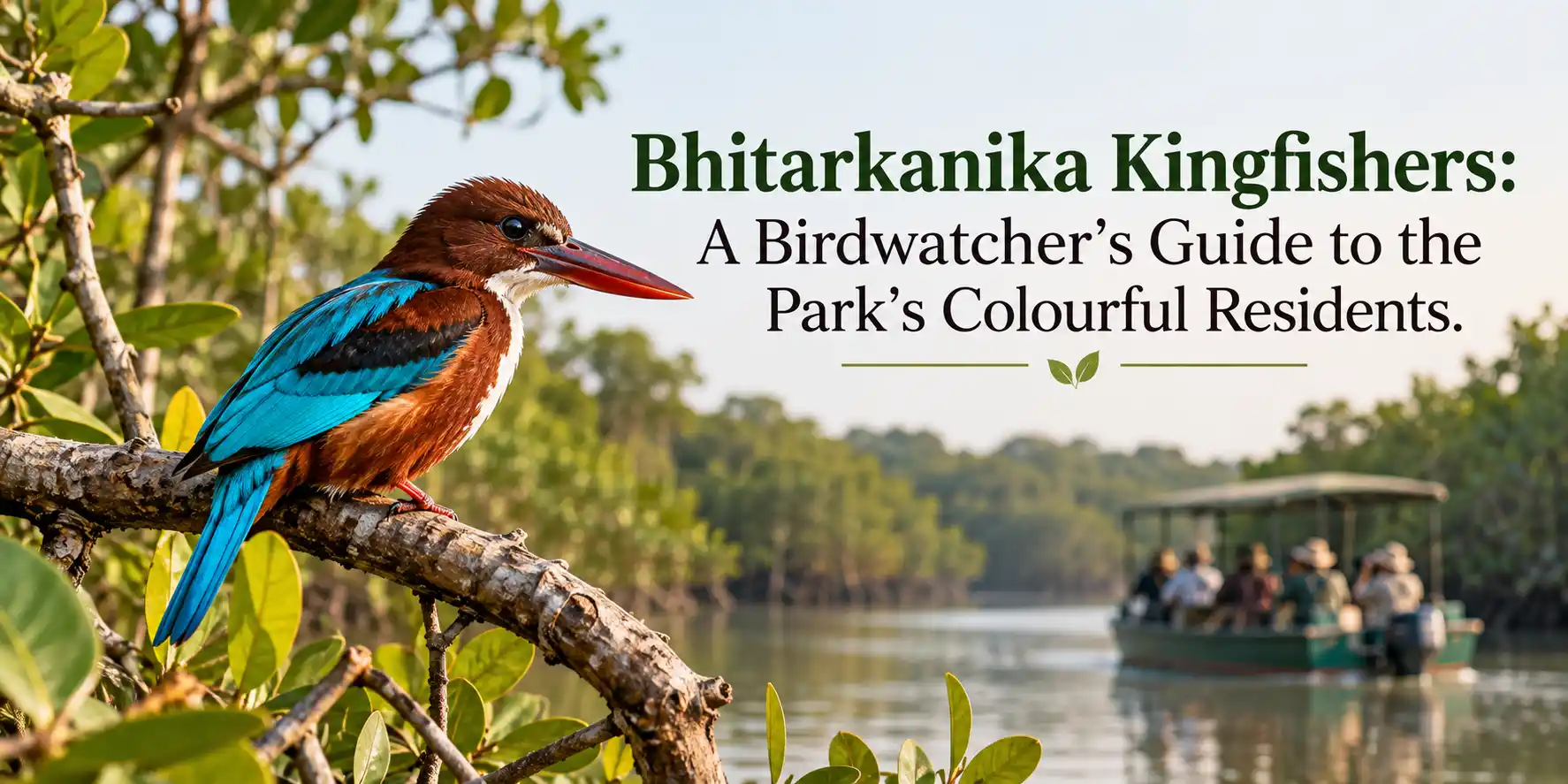
Bhitarkanika’s mangroves, wetlands and tidal waterways provide habitat for both resident and migratory birds. More than 271 bird species have been recorded in the region, and Odisha Tourism highlights eight varieties of kingfishers as well as the large nesting colony at Bagagahana near Surajpore Creek.
Bagagahana and the heronry
Bagagahana, near Surajpore Creek, is one of the most notable birdwatching areas in Bhitarkanika. Odisha Tourism describes it as a heronry where large numbers of birds gather for nesting.
The importance of places like Bagagahana becomes easier to understand when you look at the habitat around them.
The creek, vegetation and surrounding wetland provide different resources for birds at different stages of their life cycle.
Resident and migratory birds
Bhitarkanika also attracts migratory birds during the winter season. Ramsar documentation notes that riverine islands provide roosting areas for wintering waterfowl, while coastal wetlands and intertidal zones support resident and migratory wading birds.
For a species-focused guide, visit Bird Watching in Bhitarkanika.
What Makes a Mangrove Forest Different From a Normal Forest?
A mangrove forest differs from a typical inland forest because it grows in a coastal environment affected by tides, saline conditions and waterlogged soils. Mangrove species have specialised root systems and other adaptations that allow them to survive in these changing conditions.
You can see this difference while moving through Bhitarkanika.
The vegetation often grows directly beside tidal water. Roots may be exposed along muddy banks, while some areas of the forest are surrounded by shallow water or narrow channels.
The landscape is therefore shaped by two things happening at the same time:
forest growth and tidal movement.
That relationship is one of the easiest ways to understand why Bhitarkanika looks and behaves differently from a conventional woodland.
How Do Tides Affect the Bhitarkanika Ecosystem?
Tides regularly change water levels across Bhitarkanika’s creeks, wetlands and intertidal areas, influencing water movement, exposed mud and the conditions available to wildlife. The Ramsar information for the site notes that low-lying mangrove areas are subjected to regular tidal inundation and that the site contains an extensive network of tidal rivers and creeks.
For travellers, the effect is practical as well as ecological.
A bank that is visible at one point can be partially covered later. Shallow areas can change, and wildlife may use different sections of the habitat depending on conditions.
That is one reason it is difficult to predict exactly what a visitor will see on a particular boat route.
Why Is Boating So Important in Bhitarkanika?
Boating is important because many parts of the Bhitarkanika mangrove landscape are connected by waterways, making boats a primary way to move through and experience the ecosystem. Odisha Tourism describes boating through the mangrove creeks as a key activity and highlights opportunities to see wildlife, reptiles, birds and saltwater crocodiles along the waterways.
A boat journey also gives visitors a different perspective from a land-based wildlife experience.
You are moving at water level, passing through mangrove-lined channels rather than looking into a forest from a road.
That changes what you can see and where you can see it.
Which Places Help You Understand Bhitarkanika Better?
Different locations highlight different parts of the wider ecosystem.
| Place | What it adds to a Bhitarkanika trip |
| Dangamal | Wildlife viewing and crocodile-related attractions |
| Bagagahana | Bird nesting and the heronry near Surajpore Creek |
| Habalikhati | The coastal side of the Bhitarkanika landscape |
| Gahirmatha | Coastal conservation and Olive Ridley turtle habitat |
| Dhamara | Riverine and coastal surroundings |
Rather than treating these locations as unrelated tourist stops, it is useful to see them as different parts of the larger coastal and wetland landscape.
Explore the full list in our guide to Places to Visit in Bhitarkanika.
When Is the Bhitarkanika Ecosystem Most Interesting to Visit?
September to March is a commonly highlighted visiting period for Bhitarkanika, while winter is particularly relevant for migratory bird activity. Odisha Tourism specifically notes that migratory birds visit the region during winter.
The exact experience will still depend on current park access, weather, water conditions and activity arrangements.
For that reason, travellers should check current official information before planning specific activities.
We will cover detailed seasonal planning separately in our dedicated Best Time to Visit Bhitarkanika guide once that page is published.
How Does the Ecosystem Change the Way You Experience Bhitarkanika?
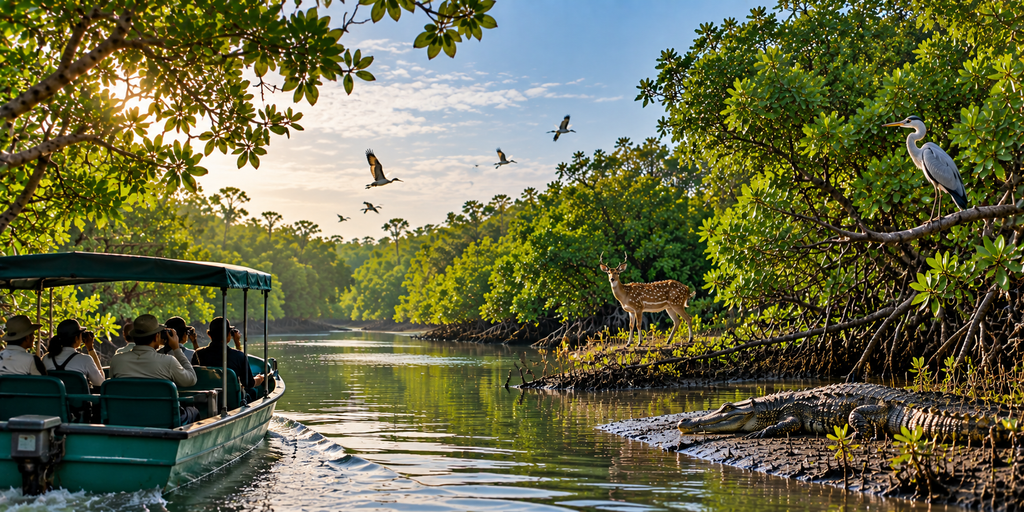
A Bhitarkanika wildlife trip is shaped by water, habitat and route rather than a fixed safari circuit. A single visit can combine boating, wildlife observation, birdwatching and short nature walks, with sightings changing according to location and conditions. Odisha Tourism lists boating, trekking, birding and photography among the main activities associated with Bhitarkanika Nature Camps.
This is worth knowing before you visit.
Wildlife sightings are not guaranteed
Even in a wildlife-rich area, animals move around and may not be visible from every route.
Different habitats produce different sightings
Mangrove edges, open water, wetlands, river islands and intertidal areas all offer different conditions.
The boat ride is part of the wildlife experience
You are not simply travelling between attractions. The route itself passes through the habitat.
A shorter itinerary needs clear priorities
Trying to cover every possible place in a single day can leave little time to actually experience the waterways and wildlife.
How Many Days Do You Need to Explore Bhitarkanika?
A 1-night, 2-day trip can cover the core Bhitarkanika experience, while a 2-night or 3-night stay gives you more flexibility for additional sightseeing, birdwatching and nature-based activities.
The right duration depends on your priorities.
For a shorter trip, you can focus on boating, wildlife and one or two key attractions.
For a longer trip, there is more room to add birdwatching, coastal locations and a less rushed itinerary.
You can compare the available trip formats here:
1 Night 2 Days Bhitarkanika Tour
2 Nights 3 Days Bhitarkanika Tour
3 Nights 4 Days Bhitarkanika Tour
For the broader package selection, see Bhitarkanika Tour Packages.
Where Should You Stay When Exploring Bhitarkanika?
Your accommodation should be chosen around your itinerary rather than separately from it.
Travellers should consider their planned route, room requirements, access to activities and the amount of time they want to spend exploring Bhitarkanika. Herit Eco Resort is one accommodation option for visitors planning a stay around the destination.
You can compare:
For direct availability enquiries, visit Bhitarkanika Hotel Booking.
Why Does the Bhitarkanika Mangrove Ecosystem Matter Beyond Tourism?
Bhitarkanika’s mangroves matter beyond tourism because they provide wildlife habitat, support wetland functions, help stabilize sediments and offer natural protection against tidal surges. Ramsar identifies flood control, sediment trapping and shoreline stabilisation among the site’s hydrological values.
Bhitarkanika Mangroves has also been recognised as a Ramsar Wetland of International Importance since 19 August 2002.
Government monitoring of the wider Bhitarkanika Conservation Area also describes it as a major mangrove ecosystem and tracks ecological indicators including flora, fauna, water and ecosystem services.
That context changes how the destination should be viewed.
It is not simply a place where visitors come to see crocodiles or take a boat ride. The attractions exist because a much larger coastal ecosystem continues to function around them.
Final Takeaway
The Bhitarkanika mangrove ecosystem is a connected system of forest, tidal creeks, wetlands and coastal habitats that supports the wildlife visitors come to see.
The crocodiles depend on the waterways and banks.
The birds use wetlands, trees, river islands and intertidal areas.
The mangroves stabilise the coastal environment.
And the tidal creeks connect these habitats.
Understanding that relationship makes a Bhitarkanika visit more meaningful. Instead of seeing boating, birdwatching and wildlife observation as separate activities, you can see them as different ways of experiencing the same living ecosystem.
For travellers planning their first visit, start with the Bhitarkanika National Park guide, then explore Boating in Bhitarkanika, Bird Watching in Bhitarkanika and Places to Visit in Bhitarkanika.
People Also Ask About Bhitarkanika Mangroves
1. What is the Bhitarkanika mangrove ecosystem?
The Bhitarkanika mangrove ecosystem is a tidal wetland made up of mangrove forests, creeks, rivers, wetlands and intertidal habitats that support diverse wildlife and birdlife.
2. Why are mangroves important in Bhitarkanika?
Mangroves provide wildlife habitat, help stabilise coastal sediments and reduce the impact of tidal water movement along the coastal environment.
3. What wildlife can be seen in the Bhitarkanika mangroves?
Visitors may see saltwater crocodiles, spotted deer, reptiles and a wide range of resident and migratory birds.
4. Why is boating important in Bhitarkanika?
Boating provides access to the mangrove waterways and allows visitors to experience the ecosystem while looking for wildlife along the creeks and riverbanks.
5. Why is Bhitarkanika different from a normal forest?
Bhitarkanika is strongly influenced by tides, with mangrove vegetation, wetlands and waterways adapting to changing water levels and coastal conditions.