Bhitarkanika is one of the best-known places in India to see the saltwater crocodile (Crocodylus porosus) in a mangrove and estuarine setting. The reason is not simply the number of crocodiles. It is the combination of tidal creeks, mangrove forests, riverbanks and wetlands that creates suitable habitat for this large coastal crocodilian. Odisha Tourism describes Bhitarkanika as a major habitat for giant saltwater crocodiles and highlights crocodile sightings during boat journeys through the park.
So, where do you actually see them?
For most visitors, the best opportunity is while travelling by boat through the park’s waterways, particularly along sections where crocodiles use exposed banks or muddy edges for basking. Sightings are never guaranteed, because these are wild animals and their position changes with water, weather and behaviour.
Understanding that makes the experience much more realistic than expecting a fixed “crocodile point.”
What Makes Bhitarkanika a Habitat for Saltwater Crocodiles?
Bhitarkanika provides the combination of tidal rivers, mangrove creeks, wetlands and coastal habitat that saltwater crocodiles can use for shelter, feeding, movement and reproduction. The region sits in the estuarine system of the Brahmani and Baitarani rivers, with a dense network of waterways extending through the mangrove landscape.
Saltwater crocodiles are not restricted to seawater. The IUCN Crocodile Specialist Group notes that the species occurs in tidal and freshwater rivers and swamps and can travel along coastlines.
That adaptability fits Bhitarkanika particularly well.
Here, fresh and saline water interact through an estuarine system. Tidal movement constantly changes conditions along creeks, riverbanks and wetlands, while the mangroves provide cover and habitat around those waterways.
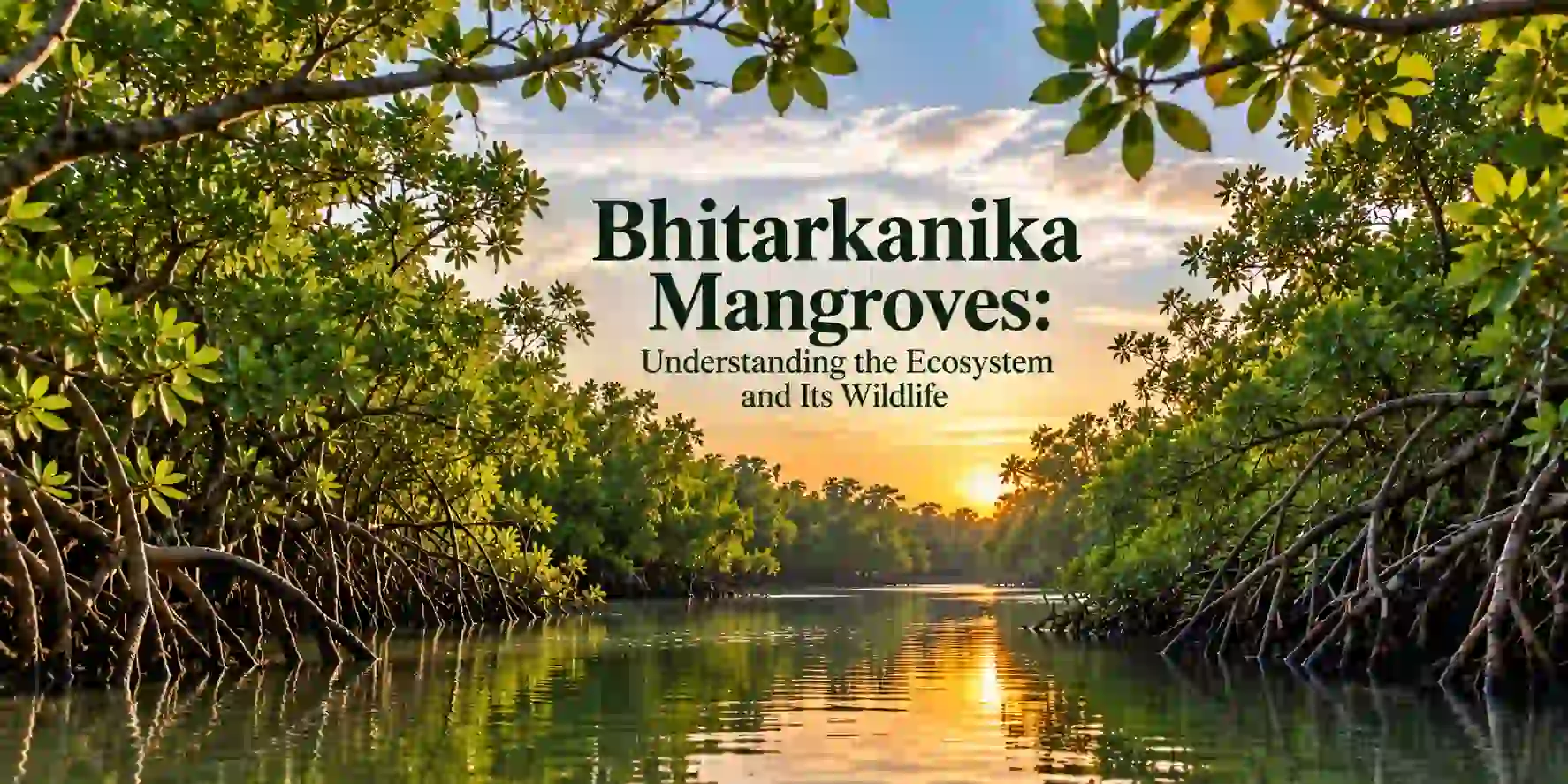
This is also why the Bhitarkanika Mangrove Ecosystem article is useful background before planning a wildlife-focused visit.
How Many Saltwater Crocodiles Are There in Bhitarkanika?
Odisha’s 2024–25 saltwater crocodile census recorded 1,881 crocodiles across the river systems covered by the Rajnagar and Bhadrak Wildlife Divisions. The count included hatchlings, yearlings, juveniles, sub-adults and adults.
The government report gives the 2025 size distribution as:
- 585 hatchlings
- 405 yearlings
- 343 juveniles
- 174 sub-adults
- 374 adults
That number needs one important clarification: it is not a simple headcount of crocodiles inside the tourist area alone. The census covered river systems under the two wildlife divisions, including areas inside and outside the Bhitarkanika Wildlife Sanctuary.
That distinction matters because online travel pages sometimes quote crocodile numbers without explaining what area or survey they refer to.
Where Can You Spot Saltwater Crocodiles in Bhitarkanika?
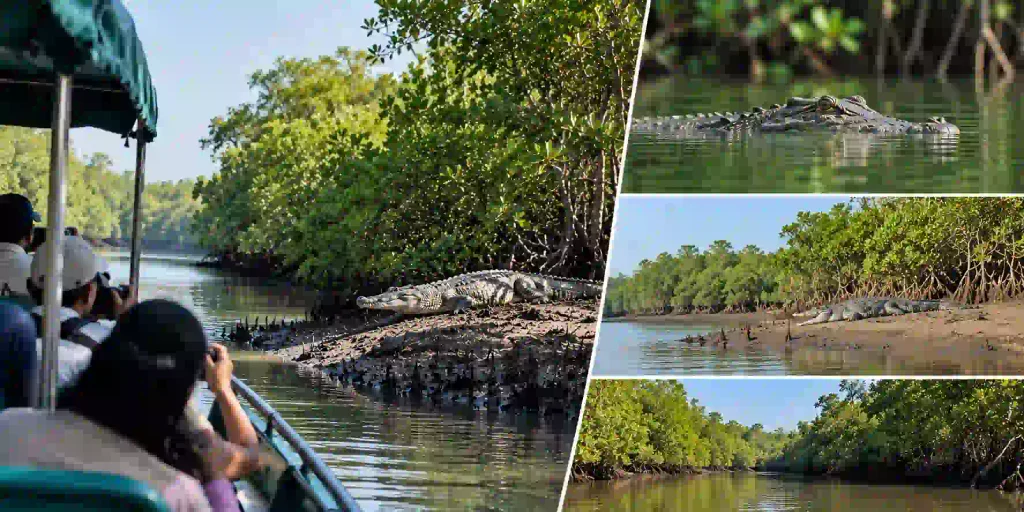
The most practical way for visitors to look for saltwater crocodiles is from authorised boat routes through Bhitarkanika’s creeks and rivers. Odisha Tourism itineraries specifically describe crocodile sightings from boats, including crocodiles basking along riverbanks and creek edges.
Dangamal
Dangamal is one of the most recognisable wildlife areas associated with Bhitarkanika.
Official Odisha Tourism itineraries include Dangamal as part of boat-based wildlife trips and mention its crocodile-related attractions, including the crocodile reservoir and conservation facilities.
A visit to Dangamal can therefore add context to the crocodile experience rather than simply giving you another place to take photographs.
You can explore more about Dangamal and other nearby locations in our guide to Places to Visit in Bhitarkanika.
Mangrove-lined creek sections
Some of the most interesting sightings happen away from a formal “attraction.”
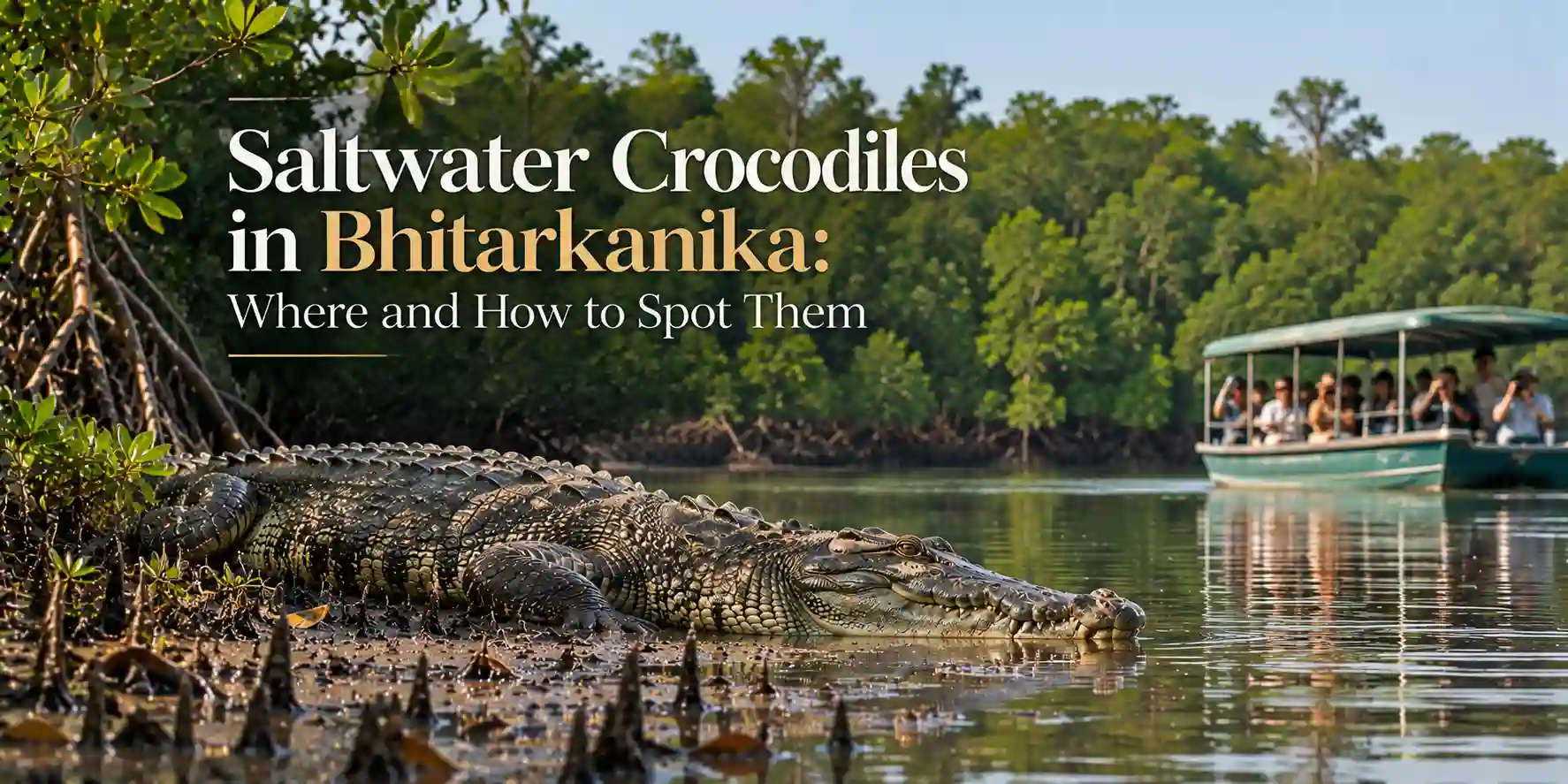
A crocodile may be lying motionless on a muddy or sandy bank, partly surrounded by mangrove vegetation. From a boat, the animal may initially look like a log or dark patch on the shoreline.
This is one reason a slow-moving boat and an experienced guide are useful: trained eyes are often better at noticing an animal that is deliberately staying still.
Riverbanks and exposed banks
Crocodiles are ectothermic, meaning their body temperature is influenced by external heat. The IUCN Crocodile Specialist Group explains that crocodilians commonly move between water, sun and shade as part of thermoregulation.
That helps explain why you may see a crocodile resting on an exposed bank rather than actively swimming.
What Is the Best Time to Spot Crocodiles in Bhitarkanika?
Crocodile sightings depend more on animal behaviour, water conditions, weather and route than on a single guaranteed viewing time. They may be seen resting along exposed banks or near water, but wildlife activity varies from one trip to another.
Odisha Tourism itineraries include boat trips specifically describing crocodiles basking along waterways, while the IUCN Crocodile Specialist Group confirms that basking and movement between water and land are normal crocodilian behaviours.
For visitors, the practical takeaway is simple:
Don’t plan your entire trip around a promise of seeing a crocodile at a particular hour.
Plan the right habitat and route instead.
Winter is also particularly relevant if wildlife watching includes birds, as Bhitarkanika attracts migratory species during the colder months. That makes a winter visit useful for a broader wildlife experience, rather than crocodiles alone.
For the wider seasonal picture, keep an eye on current park notices before travelling. Odisha Wildlife has issued seasonal closure notifications for Bhitarkanika during crocodile breeding and nesting periods, so operating dates should always be checked against current official information.
Why Do Crocodiles Bask on the Riverbanks?
Saltwater crocodiles bask because moving between water, sunlight and shade helps them regulate body temperature. Crocodilians are ectothermic, so they rely on external heat rather than generating body heat internally in the same way mammals do.
This explains something first-time visitors often notice.
A crocodile can remain almost completely motionless for a long time.
It is not necessarily inactive.
It may simply be warming itself while conserving energy.
From a boat, this behaviour can make crocodiles particularly easy to miss. A large animal lying perfectly still on a muddy bank can blend remarkably well into the surrounding landscape.
What Does a Saltwater Crocodile Look Like?
The saltwater crocodile is the largest living crocodilian species, with adult males normally reaching around 5–6 metres, while exceptional individuals can grow larger. The IUCN Crocodile Specialist Group lists the species’ normal maximum size for adult males at 5–6 metres and notes occasional reports of larger individuals that are less well substantiated.
That distinction is worth making because travel websites sometimes repeat very large crocodile measurements without explaining whether those records have been properly verified.
In Bhitarkanika, visitors may encounter animals of very different sizes—from hatchlings to large adults.
The 2025 Odisha census confirms that the population includes all major size classes, rather than consisting primarily of giant adults.
Why Are Saltwater Crocodiles Important to Bhitarkanika?
Saltwater crocodiles are an important part of the Bhitarkanika food web because they occupy a high-predator position within the estuarine ecosystem. Odisha Tourism describes them as the region’s apex predator, while its educational material connects crocodiles with the wider food web of the mangrove ecosystem.
Their importance is therefore larger than tourism.
The crocodile population is also a useful indicator of whether the habitat still supports the conditions needed by a large aquatic predator.
That includes functioning waterways, suitable banks, prey availability and areas where crocodiles can reproduce.
How Did Bhitarkanika Become Known for Crocodile Conservation?
Bhitarkanika’s crocodile conservation programme dates back to 1975, when the sanctuary was declared and the Crocodile Conservation and Research Centre was established at Dangamal. Government tourism information continues to identify the region as a major natural crocodile breeding area.
The conservation story is important because today’s wildlife experience did not happen by accident.
Bhitarkanika’s crocodile population has been protected alongside the mangrove habitat on which it depends.
Dangamal remains particularly relevant to that story and is one of the places where visitors can connect the wildlife experience with the area’s conservation work. Odisha Tourism itineraries include the crocodile hatchery and wildlife museum as part of visits to Dangamal.
Can You See Crocodiles While Boating in Bhitarkanika?
Yes. Boat trips are one of the main ways visitors look for saltwater crocodiles in Bhitarkanika. Official Odisha Tourism itineraries describe cruising through the river and creek system with opportunities to see crocodiles basking along the banks.
The key is not speed.
A slower boat journey gives passengers more opportunity to scan the banks, waterline and exposed mud.
It also keeps the experience focused on observation rather than chasing an animal.
Read our detailed guide to Boating in Bhitarkanika before planning the trip.
What Should You Do If You See a Crocodile?
Stay inside the boat, keep a safe distance and observe quietly. Do not attempt to approach, feed, call, lure or interact with a wild crocodile.
This sounds obvious, but it is particularly important with saltwater crocodiles because they are large wild predators.
A good wildlife encounter is one where the animal continues its normal behaviour and the visitor does not interfere.
Follow instructions from your authorised boat operator or forest guide, and don’t ask the boatman to move unnecessarily close simply to get a better photograph
Can You See Baby Crocodiles in Bhitarkanika?
Yes, hatchlings are part of the Bhitarkanika crocodile population, and the 2025 Odisha census recorded 585 hatchlings across the surveyed river systems.
Young crocodiles can be harder to notice than adults because of their size and behaviour.
They may remain close to the shoreline or vegetation, so visitors should not expect to see them in the same way they might spot a large adult basking on a bank.
The presence of hatchlings is nevertheless important from a conservation perspective because it shows that the surveyed population includes active recruitment into different age classes.
Is Bhitarkanika Safe for a Wildlife Trip?
Bhitarkanika can be explored as a guided wildlife destination, but visitors should treat saltwater crocodiles as wild animals and follow park and guide instructions throughout the trip.
The safest approach is straightforward:
Stay within authorised visitor routes.
Remain in the boat where instructed.
Don’t enter the water.
Don’t approach crocodiles on foot.
Don’t feed wildlife.
Keep children close and supervised.
The aim is not to get as close as possible.
The aim is to observe the animal without changing its behaviour.
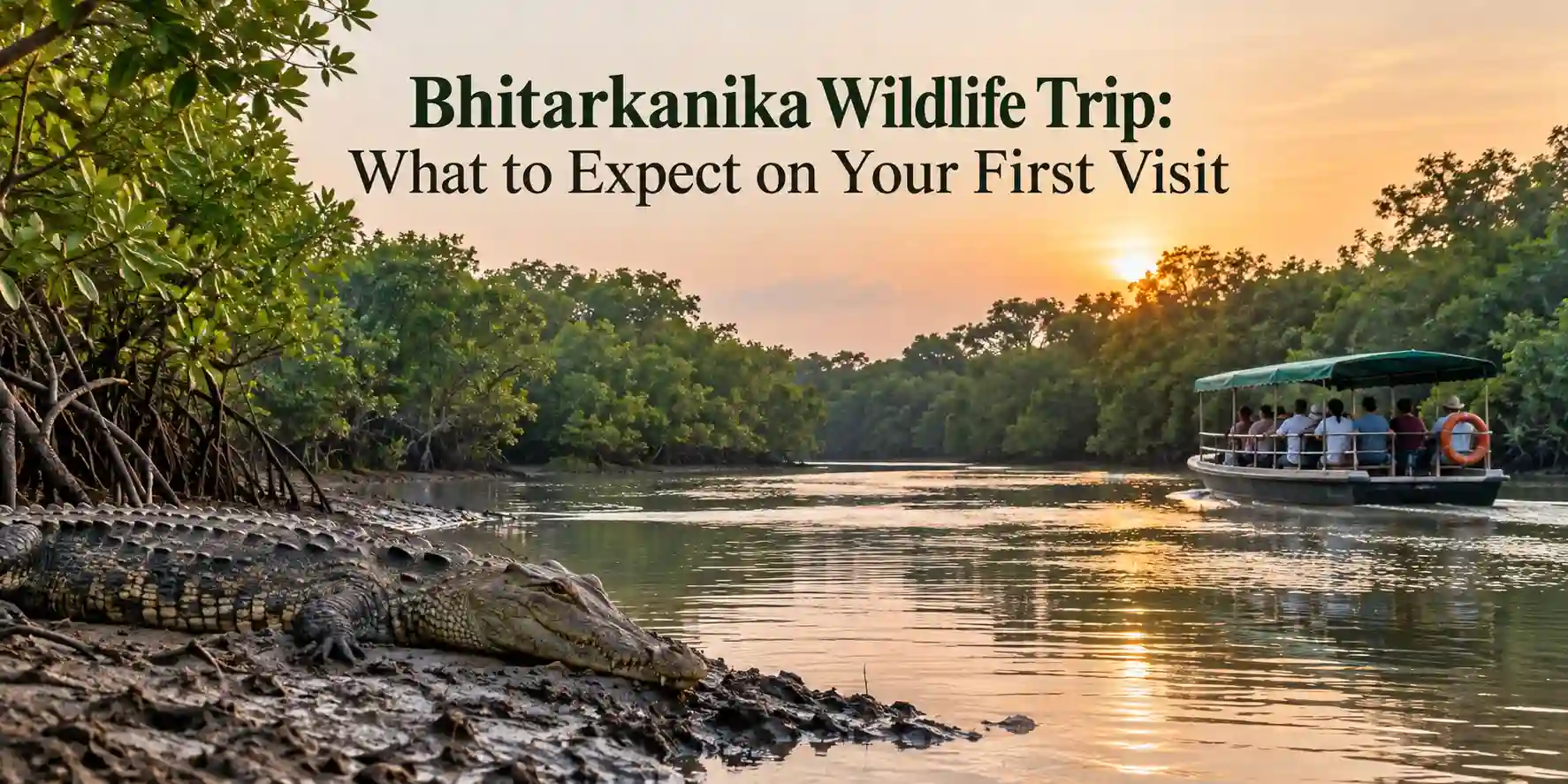
For a broader first-time perspective, see our Bhitarkanika Wildlife Trip: What to Expect on Your First Visit.
What Other Wildlife Can You See Alongside Crocodiles?
One of the advantages of exploring Bhitarkanika by boat is that crocodiles are only one part of the wildlife experience.
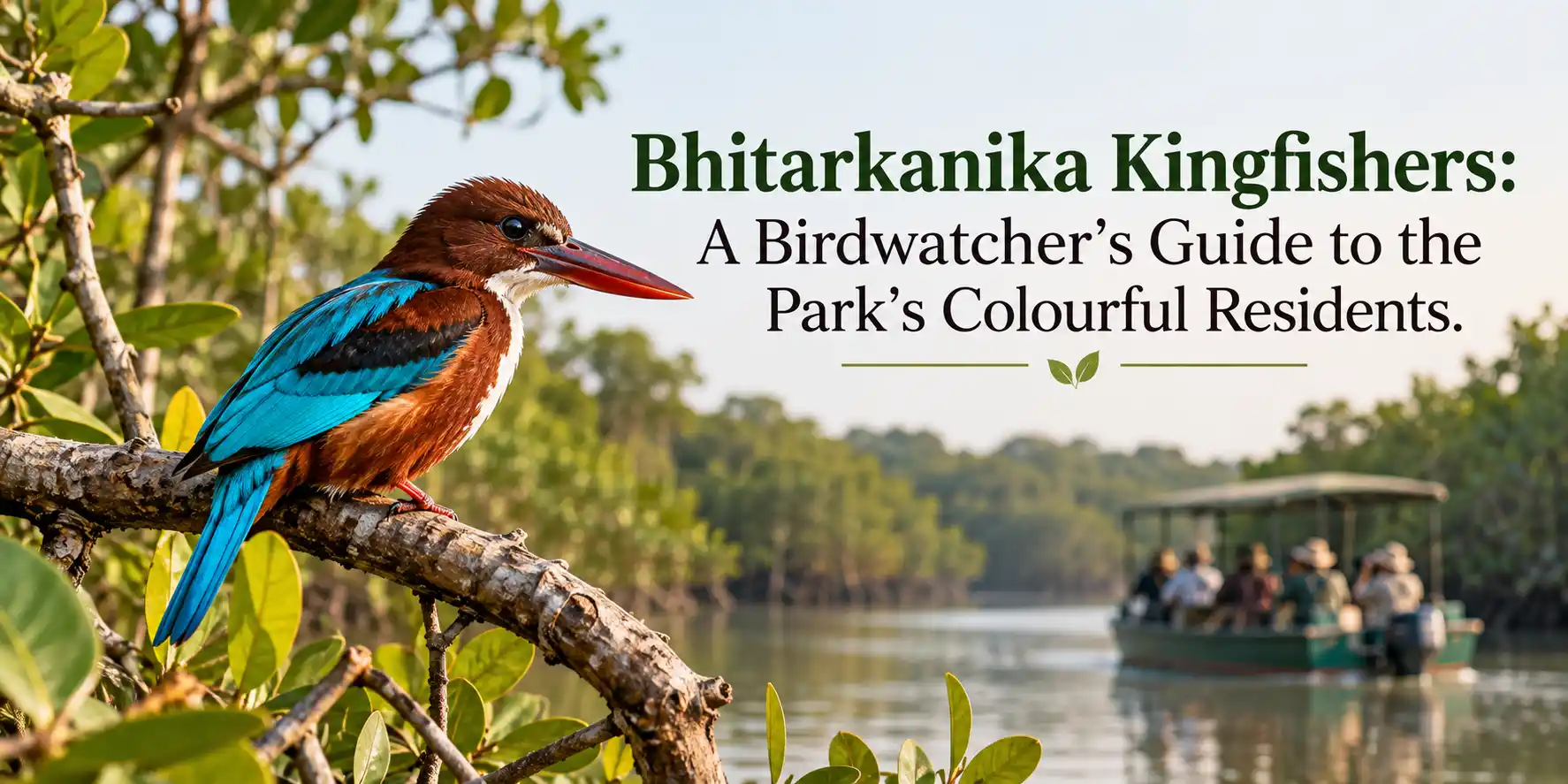
Visitors may also encounter spotted deer, water monitor lizards, birds and other wetland and mangrove species. Odisha Tourism’s Bhitarkanika material highlights crocodiles, spotted deer, birds and reptiles as part of the broader wildlife experience.
Birdwatching is particularly relevant during winter when migratory birds add another dimension to the trip.
For a more detailed birding guide, visit Bird Watching in Bhitarkanika.
How Long Should You Plan for a Crocodile-Watching Trip?
A 1-night, 2-day Bhitarkanika trip can work for travellers whose main priorities are boating and wildlife, while two or three nights allow more time for birdwatching, nature walks and additional locations.
For shorter trips, keep the itinerary focused rather than trying to cover every attraction.
You can compare:
1 Night 2 Days Bhitarkanika Tour
2 Nights 3 Days Bhitarkanika Tour
3 Nights 4 Days Bhitarkanika Tour
Or see the complete Bhitarkanika Tour Packages page.
Where Should You Stay for a Bhitarkanika Wildlife Trip?
For a wildlife-focused trip, accommodation should fit your route and activity schedule rather than being chosen separately from the itinerary.
Travellers should consider access, room type, trip duration and the time needed for boating and sightseeing when choosing where to stay.
You can compare the destination’s accommodation options through:
For room options at Herit Eco Resort, see Rooms & Suites.
Travellers ready to enquire about availability can use the Bhitarkanika Hotel Booking page.
What Should You Expect From a Crocodile Spotting Trip?
The most realistic expectation is simple:
You have a good opportunity to see saltwater crocodiles, but there is no guaranteed sighting on any particular boat trip.
You may see:
A large crocodile basking on an exposed bank.
A smaller crocodile partly hidden beside vegetation.
Several animals along a wider stretch of river.
Or, on another trip, very few visible crocodiles at all.
That variability is normal in wildlife tourism.
The more valuable experience is learning to read the habitat—where the water meets the bank, where exposed mud is available and where the animal can remain close to both land and water.
Frequently Asked Questions About Saltwater Crocodiles in Bhitarkanika
1. Where is the best place to see saltwater crocodiles in Bhitarkanika?
Boat routes through Bhitarkanika’s mangrove creeks and river systems provide some of the best opportunities for visitors to observe saltwater crocodiles, particularly along exposed banks where they may bask.
2. When is the best time to see crocodiles in Bhitarkanika?
There is no guaranteed viewing time, but crocodiles may be visible when they are resting or basking along exposed banks and waterways. Sightings depend on weather, water conditions, route and animal behaviour.
3. How big are the saltwater crocodiles in Bhitarkanika?
Adult male saltwater crocodiles commonly reach around 5–6 metres, although some individuals can grow larger.
4. Are saltwater crocodiles dangerous?
Yes. Saltwater crocodiles are large wild predators, so visitors should never approach, feed or attempt to interact with them. Wildlife should always be observed from authorised areas and at a safe distance.
5. How many saltwater crocodiles are found in Bhitarkanika?
Odisha’s 2024–25 census recorded 1,881 saltwater crocodiles across the river systems surveyed under the Rajnagar and Bhadrak Wildlife Divisions.
Final Takeaway
Saltwater crocodiles are one of Bhitarkanika’s defining wildlife species because the region provides the tidal waterways, mangroves, wetlands and riverbanks that support them.
The best way to look for them is from an authorised boat route, where you can scan the banks and creek edges for animals resting or basking.
But the goal should not be to get closer.
The better experience is to understand why the crocodile is there: the mangrove forest, the tidal water, the exposed bank and the wider food web all form part of the same habitat.
That is also what makes a Bhitarkanika wildlife trip different from a conventional safari.
You are not following a fixed road looking for an animal.
You are moving through the animal’s habitat and waiting for the habitat to reveal it.
For the wider ecosystem context, continue with our Bhitarkanika Mangrove Ecosystem article, then explore Boating in Bhitarkanika and Places to Visit in Bhitarkanika.